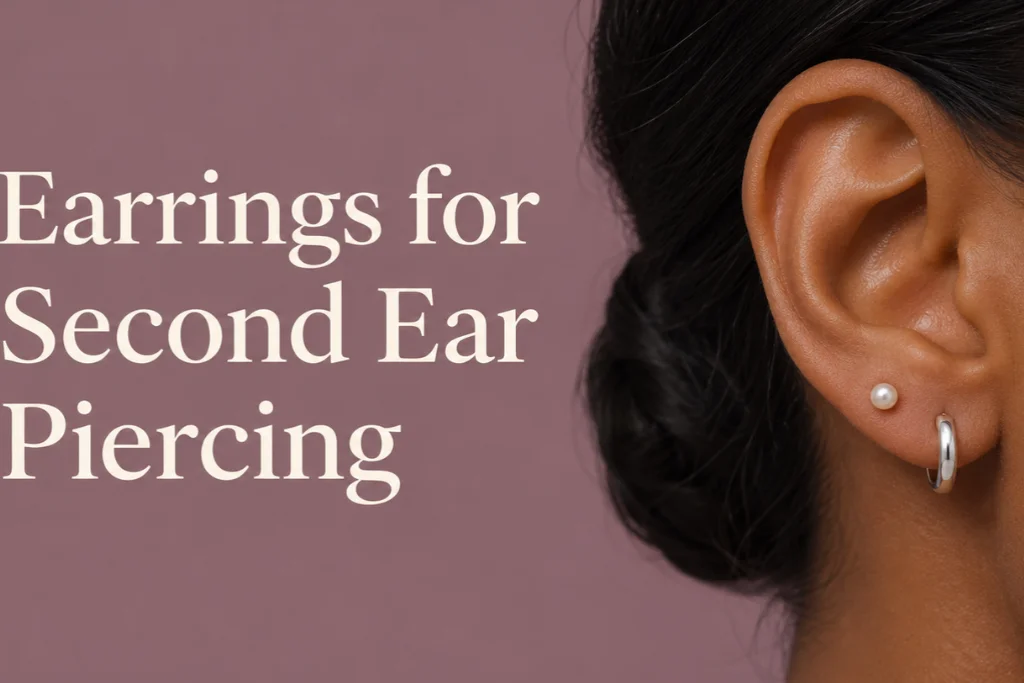
Choosing earrings for second ear piercing placement is mostly about comfort, scale, and safe materials. A smaller second-hole piece usually looks balanced beside a larger first-lobe design. Fresh piercings also need different jewelry choices than fully healed piercings.
Direct answer: The best second-lobe jewelry is small, lightweight, and comfortable enough for daily wear. Fresh piercings generally need properly fitted implant-grade titanium or suitable solid gold jewelry from a professional piercer. Once healed, mini studs, huggies, and slim hoops create an easy layered look.
| What to Consider | Practical Choice |
|---|---|
| Fresh second piercing | Implant-grade titanium or suitable 14k+ solid gold |
| Comfortable backing | Flat-back or professionally fitted threadless jewelry |
| Everyday second-hole size | Small studs or compact hoops |
| Best visual balance | Smaller piece above a larger first-hole design |
| Sensitive ears | Verified biocompatible material |
| After healing | Studs, huggies, tiny hoops, or small decorative pieces |
| Main styling goal | Create contrast without crowding the earlobe. |
What Makes Second-Hole Jewelry Different?
A second lobe piercing sits closer to the edge of your ear than the original hole. That smaller area gives large jewelry less room to sit naturally. Petite designs usually create a cleaner and more intentional arrangement. The second position also gets regular contact from hair, pillows, phones, and headphones. Bulky backs or long posts can become uncomfortable during everyday wear. A smooth, compact design can reduce snagging and pressure.
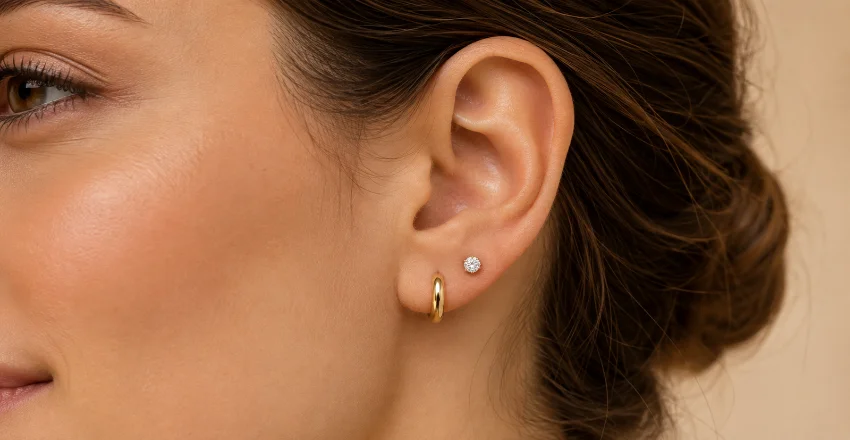
Many current styling guides recommend using a smaller upper-lobe piece beside a larger lower-lobe design. This creates a gradual visual line instead of two pieces competing for attention. The approach works with minimalist jewelry, gemstones, hoops, and mixed shapes.
7 Best Earrings for Second Ear Piercing Styling
The right choice depends first on whether the piercing has completely healed. Style becomes much more flexible after the healing period ends. Before that point, fit and material quality should take priority over fashion.
| Style | Best For | Main Advantage | Possible Drawback |
|---|---|---|---|
| Tiny flat-back studs | Fresh or everyday wear | Smooth and compact | Requires correct post length |
| Mini gemstone studs | Subtle sparkle | Easy to pair | Large settings may crowd. |
| Small metal ball studs | Minimal looks | Simple and versatile | Can look too plain for some |
| Tiny huggies | Healed piercings | Modern layered effect | Fit depends on ear anatomy. |
| Slim mini hoops | Healed piercings | Light visual movement | May snag more than studs |
| Celestial or geometric studs | Personalized stacks | Adds character | Detailed shapes may catch hair. |
| Mismatched mini pieces | Creative styling | Makes the stack distinctive | Needs visual balance |
1. Tiny Flat-Back Studs
Flat-back studs are one of the most practical choices for a second lobe position. The back sits flatter against the ear than a traditional butterfly closure. That shape can feel more comfortable during sleep or phone use. Professional piercing guidance stresses proper jewelry length, gauge, material, and finish for a healing piercing. A post that is too short can create pressure during swelling. One that is excessively long may catch on clothing or hair.
2. Mini Gemstone Studs
A small gemstone adds light without making the ear stack feel crowded. Round stones, tiny bezel settings, and compact birthstone designs work especially well. They can complement a larger first-hole stud without copying it exactly. Keep the upper stone visually smaller than the lower piece for an easy graduated effect. That difference creates a clear focal point near the bottom of the lobe. It also leaves more visible space between both piercings.
3. Small Metal Ball Studs
Simple metal studs suit people who want a clean everyday stack. Gold-tone, silver-tone, or titanium designs can work with many first-hole styles. Their rounded shape also makes coordination straightforward. Try a polished ball above a larger hoop for contrast. You can also pair one with a lower gemstone stud for a quieter combination. The result feels deliberate without requiring matching pieces.
4. Tiny Huggie Hoops
Huggies sit close around the lobe and create a polished layered shape. They work especially well beside larger hoops in the first position. Their compact diameter also keeps the upper piercing from dominating the stack. Use huggies only after a new piercing has healed and your piercer confirms a change is appropriate. Healing tissue can be more sensitive to movement and pressure. Initial jewelry should remain in place unless a qualified piercer recommends changing it.
5. Slim Mini Hoops
A thin, small hoop gives a second hole more movement than a stud. This style works well with a simple lower stud or another hoop. Varying the diameters can keep the combination from looking repetitive. Avoid choosing a hoop only because a standard diameter looks good online. Earlobe thickness and piercing placement differ from person to person. The best fit depends on your actual anatomy and the distance between both holes.
6. Celestial and Geometric Studs
Stars, moons, bars, triangles, and tiny hearts add personality without needing extra size. Their shape creates visual interest when the first hole contains something simpler. A small motif can therefore become the detail that completes the stack. Keep intricate designs smooth enough for your lifestyle. Sharp corners or raised settings may catch on hair, sweaters, or towels. People who wear headphones often may prefer flatter shapes.
7. Mismatched Mini Jewelry
Your second holes do not need identical pieces on both ears. One ear can carry a tiny stone while the other uses a polished metal stud. Repeating the same metal or color family keeps the difference intentional. This approach works especially well with asymmetrical hairstyles or multiple lobe piercings. Keep one repeated element across both ears to create visual connection. That element might be metal color, gemstone color, or geometric shape.
Best Materials for a Fresh Second Piercing
Material quality matters more during healing because jewelry remains in contact with healing tissue. The Association of Professional Piercers lists specific implant-grade titanium standards among suitable options. It also accepts appropriate 14k or higher gold when it meets stated compatibility requirements. Gold-plated, gold-filled, and gold-overlay pieces are not recommended by the APP for fresh piercings.
The outer coating can wear and expose the underlying material. High-polish surfaces and proper manufacturing quality also matter for reducing irritation. For a fresh second hole, buy the initial piece through a qualified professional piercer whenever possible. Ask what material standard the jewelry meets rather than relying only on “hypoallergenic” marketing. This gives you clearer information about what will remain inside the healing channel.
What Size Works Best for a Second Piercing?
There is no universal millimeter size because ears and piercing positions vary. Current second-hole styling guides often favor small fronts around the 2–4 mm range. That scale usually leaves enough space between first and second positions. Treat those measurements as styling guidance rather than a medical rule. A larger earlobe may comfortably support more visual weight.
A closely spaced piercing may need something much smaller. Post length matters as much as the decorative front. Initial jewelry needs enough room for expected swelling without becoming excessively long. A professional piercer should select the fit based on your anatomy.
How to Pair Your First and Second Piercing
The easiest formula starts with visual hierarchy. Put the larger or more detailed design in the first hole. Place a smaller, quieter piece above it. For example, pair a medium hoop with a tiny polished stud. You could also combine a larger gemstone below with a smaller plain-metal piece above. Writina’s coverage of minimalist accessories and styling shows how small details can support a larger fashion look without competing with it. Mixing metals can also work if the contrast looks deliberate.
Repeating one color, stone, or shape helps connect the combination. If you prefer simpler styling, keeping one metal tone across both positions removes most guesswork. Special occasions allow more sparkle without requiring oversized upper-lobe pieces. Writina’s feature on Simone Biles’ wedding styling highlights how restrained diamond accessories can complement a detailed outfit. The same principle works when building an elegant ear stack.
Fresh Piercing vs. Healed Piercing
A fresh piercing should not be treated like a fully healed accessory hole. Healing tissue benefits from stable, properly fitted jewelry and minimal unnecessary movement. The APP also advises leaving suitable initial jewelry in place throughout healing unless a professional needs to adjust it. Aftercare guidance recommends washing your hands before touching the area. The APP currently recommends sterile saline wound wash and advises against rotating jewelry during cleaning.
It also warns against harsh products such as alcohol and hydrogen peroxide. Healing times vary among individuals, placements, and professional guidance. The Canadian Professional Piercers Association lists earlobe healing at about 12 weeks or longer. Your own piercer should decide when changing the jewelry is appropriate.
Our Verdict: What Should You Choose?
For a new second lobe piercing, prioritize professional fitting and verified biocompatible material. Implant-grade titanium with a smooth, flat-back design is a strong practical choice for many people. Suitable solid gold can also work when it meets professional piercing standards. For a healed piercing, a tiny stud is the easiest all-purpose option. Choose a huggie when you want more shape, or a mini hoop for movement.
Keep the upper piece smaller than your main lower-lobe design for reliable balance. Your wardrobe can guide the final look after comfort and fit are settled. Minimal stacks pair easily with casual outfits, workwear, and more expressive fashion. Writina’s guide to sheer clothing offers another example of balancing statement elements with simpler supporting details.
Common Mistakes to Avoid
Second-hole styling looks easiest when every piece has enough room to breathe. Problems usually come from choosing oversized fronts, unsuitable materials, or jewelry that does not fit the ear correctly. Fresh piercings also need more caution than established holes. Avoid these common mistakes:
- Wearing heavy dangling pieces before healing finishes.
- Choosing an upper stud that covers or touches the first-hole design.
- Buying unknown metal based only on a “hypoallergenic” label.
- Changing initial jewelry without professional guidance.
- Sleeping on bulky or uncomfortable backs.
- Forcing a hoop diameter that does not suit your anatomy.
- Treating persistent redness, swelling, pain, or discharge as normal.
Increasing redness, warmth, severe pain, fever, or concerning discharge can signal a problem requiring medical attention. An embedded clasp or worsening swelling also deserves professional evaluation. Cleveland Clinic recommends contacting a healthcare provider for those warning signs.
Frequently Asked Questions
What earrings are best for a second ear piercing?
The best earrings for second ear piercing placement are small, light, and properly fitted. Flat-back studs are practical for many fresh lobe piercings when made from suitable materials. Healed holes can also wear huggies, tiny hoops, and decorative mini studs.
Can I wear hoops in a second piercing?
Yes, hoops can work well after the piercing has fully healed. Small huggies or thin hoops usually create the cleanest upper-lobe proportion. Ask your piercer before changing jewelry if the hole is still healing.
Should the second earring be smaller than the first?
Usually, a smaller second piece creates the easiest visual balance. The larger design then anchors the bottom of the ear. This graduated arrangement is common across current second-piercing styling guides.
Are flat backs better for second piercings?
Flat backs can be more comfortable because they sit closer to the rear of the lobe. They also avoid the protruding shape of many butterfly backs. Correct fit and material quality still matter more than backing style alone.
Can I sleep with a second-piercing stud?
Many people find low-profile flat-back pieces more comfortable for sleeping after healing. Fresh piercings should also be protected from unnecessary pressure and friction. Your piercer can recommend the safest sleeping approach for your placement.
Build Your Ear Stack Around Comfort First
A second piercing gives you more room to personalize everyday jewelry without creating a heavy look. Start with safe material, correct fit, and a small scale that suits your anatomy. Style can become more adventurous once the piercing has healed. Tiny studs offer the most flexible starting point for most wardrobes.
Huggies and mini hoops add variety when the hole is ready for them. Choose pieces that complement your first piercing instead of competing for the same visual space.