
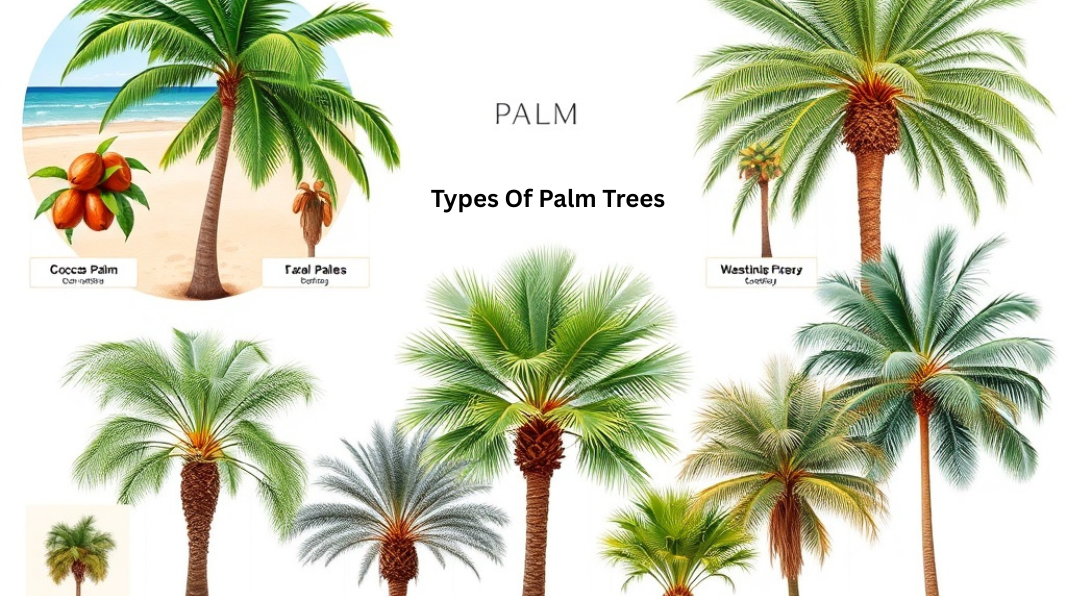
Palm trees are a diverse and globally significant group of plants in the Arecaceae family, known for their distinctive fronds and elegant growth forms. Found in environments ranging from tropical coastlines and desert oases to urban landscapes and indoor spaces, palm trees have adapted to a wide variety of climates and uses.
Their unique structure, characterized by fan- or feather-shaped leaves and often tall, slender trunks, makes them both visually striking and highly functional. Understanding the types of palm trees is essential for appreciating their economic, cultural, and ecological value.
From providing essential resources like food, oil, and fiber to enhancing landscapes and supporting wildlife, palms play a vital role worldwide. Whether used for agriculture, decoration, or environmental stability, these trees offer a wide range of benefits. By exploring the growth patterns, characteristics, and uses of palm species, individuals can better select and care for those suited to their specific needs and environments.
| Aspect | Description |
| Types Of Palm Trees | Palm varieties |
| Family | Arecaceae |
| Growth Pattern | Solitary, clumping |
| Trunk Type | Single, multiple |
| Leaf Type | Fan, feather |
| Economic Use | Food, oil |
| Cultural Value | Symbolic use |
| Ecological Role | Habitat support |
| Coconut Palm | Coastal species |
| Date Palm | Fruit producing |
| Queen Palm | Fast growing |
| Royal Palm | Tall ornamental |
| Windmill Palm | Cold hardy |
| Pygmy Date Palm | Small size |
| Areca Palm | Indoor plant |
| Clumping Palms | Multi-stem growth |
| Solitary Palms | Single trunk |
| Acaulescent Palms | No visible trunk |
| Care Needs | Water, sunlight |
| Conclusion | Versatile plants |
Types Of Palm Trees
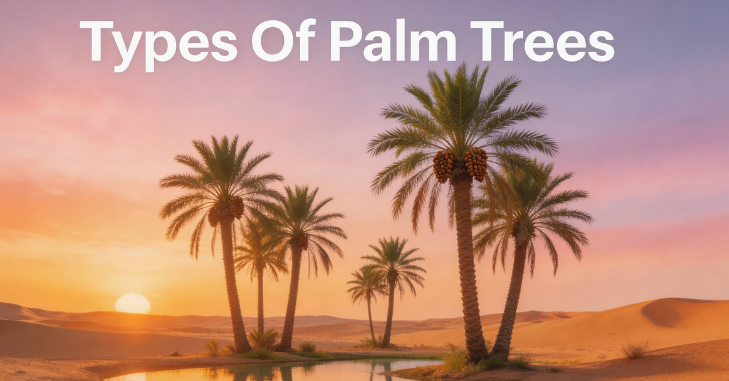
Palms (family Arecaceae) are among the most recognizable and culturally significant plants worldwide. There are types of palm trees with graceful fronds, often fan-shaped or feather-like, and tall, slender trunks that have shaped landscapes, economies, cuisines, and traditions for millennia. From tropical shorelines and desert oases to ornamental urban streets and indoor pots, palms thrive in a remarkable range of settings.
The Importance and Uses of Palm Trees
- Palms are economically, culturally, and ecologically important. Economically, several palm species are major crops. The coconut palm (Cocos nucifera) provides coconut water, milk, oil, copra, and fiber; the oil palm (Elaeis guineensis) is the world’s leading source of vegetable oil.
- The date palm (Phoenix dactylifera) produces staple fruit in arid regions, and the betel nut palm, açaí palms, and various species used for palm wine have local economic significance. Palm products extend beyond food: thatch, weaving materials, building materials, fibers for ropes and brushes, and ornamental nursery stock all come from different parts of palms.
- Historically, palms have supplied items such as sugar (from certain species), thatching, and even traditional medicines. Culturally, palms carry strong symbolic value. The palm branch is a symbol of victory, peace, and fertility in multiple cultures and religions.
- Palm leaves have been woven into mats, baskets, and ceremonial items across societies. The iconic silhouette of the palm tree often evokes images of tropical leisure, pilgrimage routes, and ancient oases, inspiring art, literature, and tourism economies.
- Ecologically, palms offer food and habitat for a wide range of wildlife. Their fruits sustain birds, bats, primates, and rodents, while their canopies provide microhabitats for epiphytes, insects, and nesting animals. In coastal zones, certain palms help stabilize dunes and protect shorelines; in desert oases, date palms create shade and microclimates conducive to other crops. Many palms are keystone species in their ecosystems, and their loss can cascade through food webs and local economies.
Types of Palm Trees by Growth Pattern
Palms display several growth forms and architectural patterns that influence how they are used in landscapes and which environments they suit. The main growth patterns include solitary-trunk palms, clustering or clumping palms, acaulescent (trunkless) palms, and pleonanthic versus hapaxanthic flowering habits. Understanding these patterns helps gardeners predict mature size, maintenance needs, and spatial compatibility.
Solitary-Trunk Palms
Solitary palms produce a single stem or trunk from their base and typically form a single crown of fronds. Many iconic palms, for instance, the coconut palm, royal palm (Roystonea), and Canary Island date palm (Phoenix canariensis), are, in fact, solitary.
These palms often create strong vertical accents in a landscape and may reach impressive heights and trunk diameters. Because they do not produce multiple trunks, they are predictable in footprint and often easier to place in formal designs. Solitary species can be single-stemmed for their entire life and, depending on species, may live for many decades.
Clustering or Clumping Palms
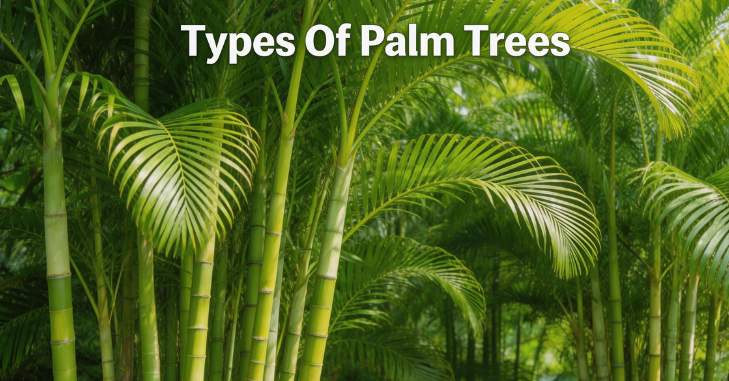
Clustering palms, also called clumping palms, produce multiple stems from a common root mass. Each stem, or cane, develops from a basal bud, resulting in a cluster of trunks that can expand outward over time. Examples include the areca palm (Dypsis lutescens), the Chinese fan palm (Livistona chinensis), and various Chamaedorea species.
Clumping palms are favored for creating dense screens, foundation plantings, and tropical understories because they rapidly fill space. They are also popular in container culture since some species maintain a manageable height.
Acaulescent (Trunkless) Palms
Acaulescent palms appear to lack a visible trunk, with leaves emerging at or near ground level. Examples include some species of Pritchardia and certain understory palms. These forms are useful for ground-level accents, low-profile shade, and understory compositions where a tall trunk would be intrusive.
Pleonanthic vs. Hapaxanthic Flowering Habits
Palms also differ in flowering strategy. Pleonanthic palms bloom multiple times over their lifespan (many times), producing inflorescences repeatedly without killing the main growing point. This is typical for most landscape palms. Hapaxanthic palms, in contrast, flower once, often with a spectacular terminal inflorescence, and then the flowered stem dies.
However, clumping species may persist because other stems continue to grow. Some bamboos and certain palms follow this semelparous pattern, which is important to know for landscape design: if a hapaxanthic solitary trunk flowers and dies, replacement planning is necessary.
Characteristics
Below are some widely cultivated and ecologically significant palms, arranged by common use or recognizable traits. This is not exhaustive palm diversity includes over 2,500 species but it highlights the ones gardeners and landscapers encounter most often.
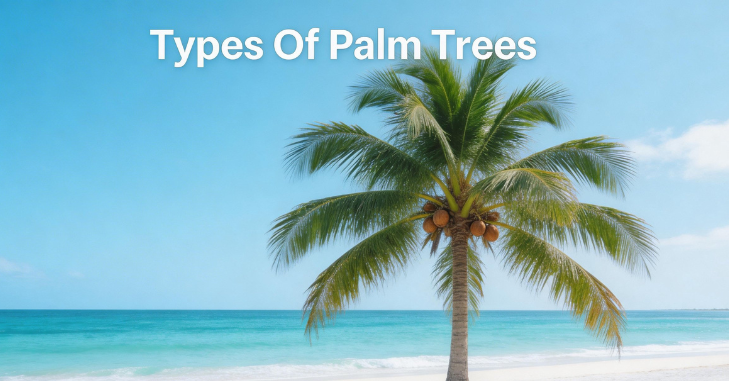
- Coconut Palm (Cocos nucifera): The coconut palm is perhaps the most iconic tropical palm. Typically solitary and reaching heights of 20–30 meters in open, favorable conditions, coconut palms thrive in sandy, well-drained coastal soils with high humidity and salt spray tolerance.
- Their large pinnate fronds and smooth trunks make a classic tropical silhouette. Economically, coconuts are invaluable: copra, coconut oil, water, milk, shells, and coir fiber have myriad uses. Coconuts prefer USDA zones roughly 10–11 and are very salt-tolerant, making them prime candidates for beach plantings.
Popular Types Of Palm Trees
- Date Palm (Phoenix dactylifera): Date palms are iconic in arid and Mediterranean landscapes. Phoenix dactylifera produces clusters of sweet dates and prefers hot, dry climates with dependable irrigation many successful date-producing regions practice intensive irrigation and pollination management.
- The genus Phoenix also includes ornamental relatives, such as Phoenix canariensis (Canary Island date palm), widely used as a specimen tree for its robust trunk and large crown.
- Queen Palm (Syagrus romanzoffiana): Queen palms are elegant, fast-growing, solitary palms with graceful, arching pinnate fronds. Landscapers commonly use them in subtropical urban environments because they develop canopies quickly and tolerate a wide range of conditions. However, they can be susceptible to cold in marginal areas and to certain pests such as lethal yellowing in affected regions.
- Royal Palm (Roystonea spp.): Royal palms are statuesque, with smooth, often swollen bases and long crowns of feathered fronds. Species like Roystonea regia (the Cuban royal palm) are prized as formal street trees and avenue plantings in tropical settings. They require ample space and good soil depth to avoid root conflicts with infrastructure.
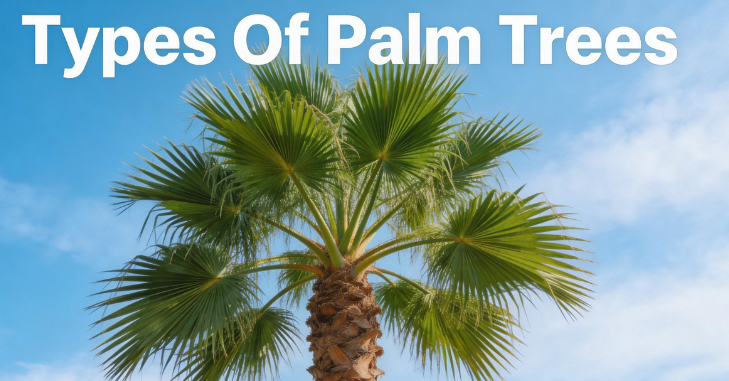
- Windmill Palm (Trachycarpus fortunei): Windmill palm stands out among more cold-tolerant palms. With its fan-shaped fronds and hairy trunk, Trachycarpus fortunei tolerates surprisingly cold temperatures for a palm, and gardeners can grow it in USDA zone 7 in protected locations. Many landscapers prefer it for temperate climates because it creates a tropical effect without requiring tropical temperatures.
Pygmy Date Palm (Phoenix roebelenii): Pygmy date palms are small, clumping palms suitable for containers, patios, and understory plantings. Their attractive feathery fronds and moderate size make them versatile accent plants, though they are relatively slow-growing compared with larger species.
- Areca Palm (Dypsis lutescens): Areca palms are popular indoor and outdoor palms in warm climates. They grow in clusters of multiple stems, forming dense screens. Their fine-textured fronds lend a soft tropical look, and they adapt well to partial shade, making them a good choice for patios and indoor spaces with bright indirect light.
Common Misconceptions and Practical Realities
People often assume all palms are fast-growing, tropical, and unsuitable for temperate climates. In reality, palms include cold-hardy species that perform well in many temperate regions. Another misconception is that palms require little maintenance; while mature palms can be low-maintenance, young palms need watering, protection from weeds, and appropriate fertilization.
Palm palms are sometimes mistakenly thought to be trees in the conventional sense; botanically, palms are monocots and have different growth habits (e.g., no secondary growth), which affects pruning and trunk repair practices.
Conclusion
Types of palm trees are diverse and fascinating plants that offer ecological, economic, and ornamental value. By understanding the different growth patterns, popular species, cultural requirements, and landscape uses, gardeners and landscapers can select palms that thrive in their climate and fulfill design or production goals.
Whether you seek a towering coconut for a coastal resort, a wind-resistant Sabal for a seaside garden, a cold-hardy Trachycarpus for a temperate setting, or a clumping areca palm for indoor greenery, you can find a palm that suits nearly every purpose. Responsible sourcing, careful site selection, and attentive maintenance will ensure palms remain healthy, safe, and majestic elements of landscapes for generations to come.
If you want to read an interesting article about it, explore our Lifestyle category.
FAQs
Royal palms are the tallest palms native to Florida and really stand out with their massive, smooth white trunks. Found in the warmer and wetter parts of our state, Roystonea regia is right at home in a blackwater swamp.
There are a few more than 3,000 different species of palms, but they typically produce just a few basic patterns of leaves. Two of the most common leaf structures produced by palm trees are the Fan-type/Palmate.
The iconic Hollywood tree is known as the Mexican or needle palm (Washingtonia robusta). A skinny trunk that may reach 80 feet in height is topped with an inelegant mophead of tattered fronds.
Self-cleaning palms include King Alexander (Archontophoenix alexandrae), Royal palm (Roystonea regia), Chinese Fan palm (Livistona chinensis), and Christmas palm (Adonidia merrillii).