
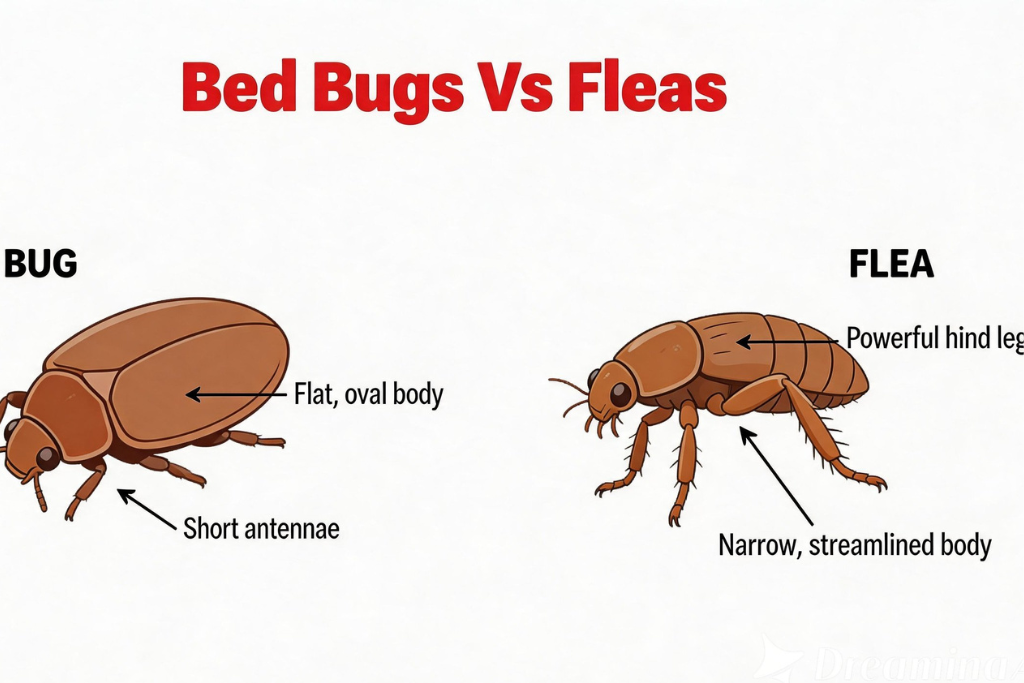
Bed Bugs Vs Fleas is a common comparison in household pest problems, as both are small, blood-feeding insects that can cause significant discomfort and stress. Although they may seem similar at first because of their biting behavior, they are actually very different in appearance, habitat, feeding patterns, movement, and their impacts on health. Bed bugs are most commonly found in sleeping areas, such as mattresses and furniture, while fleas are commonly found on pets and in carpets.
Understanding the differences between them is important for correct identification, effective treatment, and long-term prevention. This detailed overview covers the major aspects of Bed Bugs Vs Fleas, including their physical characteristics, habitats, feeding behavior, signs of infestation, health risks, and control methods.
| Category | Bed Bugs | Fleas |
| Appearance | Flat, oval-shaped, reddish-brown, apple-seed size | Small, narrow, dark brown/black, very tiny |
| Movement | Slow crawling, cannot jump or fly | Fast movement, strong jumping ability |
| Habitat | Beds, mattresses, bed frames, furniture | Pets, carpets, rugs, animal bedding, and outdoor soil |
| Feeding Behavior | Feed at night for several minutes while the host sleeps | Bite quickly and repeatedly, often on animals |
| Bite Pattern | Often in lines or clusters, mainly at night | Clusters, usually on legs and ankles |
| Infestation Signs | Blood stains, fecal spots, musty odor, shed skins | Pet scratching, jumping insects, flea dirt |
| Health Risks | Allergies, itching, skin irritation, no disease spread | Allergies, possible disease transmission, parasites |
| Activity Time | Nocturnal (active at night) | Active day and night |
| Elimination Methods | Heat treatment, vacuuming, insecticides, pest control | Pet treatment, cleaning, and insect growth regulators |
| Prevention | Inspect bedding, avoid used furniture, and clean sleeping areas | Pet care, grooming, vacuuming, flea prevention products |
Bed Bugs Vs Fleas

Bed bugs and fleas are among the most common household pests, causing significant discomfort and distress. Although both are small, blood-feeding insects, they differ greatly in appearance, behavior, habitat, and the way they affect humans and animals. Many people confuse the two because both cause itchy bites and spread quickly, but understanding their differences is important for proper identification and effective treatment.
Bed bugs are typically associated with sleeping areas and furniture, while fleas are more commonly linked to pets and carpets. Knowing how to distinguish between them can help choose the right control methods and prevent infestations from worsening.
Appearance Differences Between Bed Bugs and Fleas
- Bed bugs and fleas can be easily distinguished by their physical features when closely examined.
- Bed bugs are flat, oval-shaped insects with a reddish-brown color.
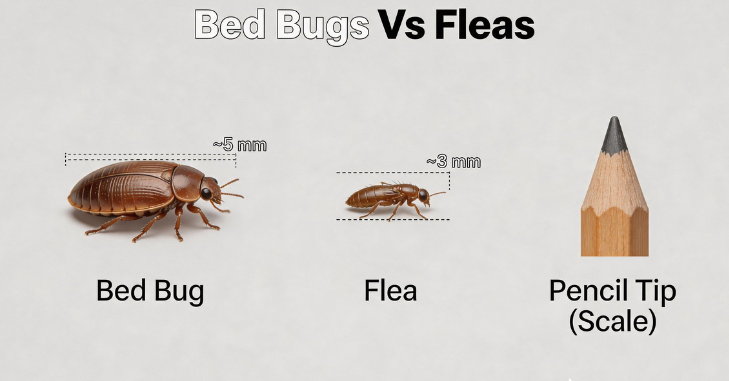
- They are generally larger than fleas and can reach the size of an apple seed when fully developed.
- Their flat bodies help them hide easily in tight spaces such as mattress seams, bed frames, and cracks in furniture.
- Fleas, on the other hand, are much smaller and darker in color, usually appearing black or dark brown.
- Unlike bed bugs, fleas have a narrow and laterally compressed body that allows them to move quickly through fur and feathers.
- One of the most noticeable differences is that fleas can jump long distances relative to their size.
- Bed bugs cannot jump or fly; instead, they crawl slowly and hide in sheltered areas.
Habitat and Living Conditions

Living Environments of Bed Bugs and Fleas
The living environments of bed bugs and fleas also differ significantly, as both pests prefer very different conditions for survival and reproduction.
Bed Bug Habitats in Human Sleeping Areas
Bed bugs are primarily found in human sleeping areas. They prefer mattresses, bed frames, headboards, and nearby furniture because they feed on humans while they sleep. These pests are highly adapted to indoor environments and can survive for long periods without feeding, making them difficult to eliminate once established.
Flea Habitats in Homes and on Animals
Fleas, in contrast, are more commonly associated with animals, especially pets like cats and dogs. They thrive in warm, humid environments and are often found in pet bedding, carpets, rugs, and upholstered furniture. Fleas require a host to feed on more frequently than bed bugs, which is why they are usually found in areas where animals spend most of their time.
Outdoor Breeding Grounds for Fleas
Outdoor environments such as gardens and shaded soil areas can also serve as breeding grounds for fleas. These conditions provide the warmth and moisture they need to survive and continue their life cycle.
Feeding Behavior and Biting Patterns
Bed bugs and fleas both feed on blood, but their feeding habits differ significantly. Bed bugs usually feed at night while their host is sleeping. They use specialized mouthparts to pierce the skin and draw blood for several minutes before retreating to their hiding spots. Bed bug bites are often painless at first, but they can later cause itching, redness, and irritation.
Fleas, however, are more aggressive feeders. They bite quickly and repeatedly, often jumping from one host to another. Flea bites are typically found on the lower legs and ankles in humans, as fleas tend to stay close to the ground or on pets. The bites are usually very itchy and may appear in clusters or lines. Unlike bed bugs, fleas do not rely on a single feeding session and will continue biting multiple times in a short period.
Signs of Infestation
- Identifying an infestation early is crucial for effective control of both bed bugs and fleas.
- Bed bug infestations are often recognized by small blood stains on sheets and bedding.
- Dark fecal spots on mattresses and furniture are another common sign of bed bugs.
- A musty odor may also be present in areas with a heavy bed bug infestation.
- Shed skins can be seen as bed bugs grow and molt.
- Bed bugs usually hide during the day, making them difficult to spot unless the infestation is severe.
- Flea infestations are often identified through unusual behavior in pets.
- Pets may scratch excessively, bite their fur, or appear restless when fleas are present.
- In the home, tiny jumping insects may be seen on carpets, furniture, or bedding.
- Flea dirt, which looks like small black specks, is a common indicator of infestation.
- Unlike bed bugs, fleas are easier to notice because of their active movement and jumping behavior.
Health Risks Caused by Bed Bugs and Fleas
Both bed bugs and fleas can cause health issues, although they affect humans in different ways.
Health Effects of Bed Bug Bites
Bed bugs are not known to transmit diseases, but their bites can still cause several discomforts. They may lead to allergic reactions, skin irritation, and persistent itching. In many cases, people also experience sleep disturbances due to anxiety and repeated biting at night. In severe cases, continuous scratching can break the skin and lead to secondary infections.
Health Risks Associated with Fleas
Fleas, however, pose more serious health risks than bed bugs. They are known carriers of certain diseases and parasites, including tapeworms in pets. Flea bites can trigger allergic dermatitis, especially in animals, which leads to intense itching, redness, and discomfort.
Disease Transmission and Medical Concerns
In rare cases, fleas have been linked to the transmission of diseases such as murine typhus. Because of their ability to spread infections and affect both humans and animals, flea infestations are generally considered more medically concerning than bed bug infestations.
Movement and Behavior Differences
One of the most noticeable behavioral differences between bed bugs and fleas is their movement. Bed bugs move slowly and do not jump or fly. They rely on crawling and are excellent at hiding in small cracks and crevices during the day. Their behavior is mostly nocturnal, meaning they are active at night when their host is asleep.
Fleas, on the other hand, are highly active insects capable of jumping long distances. This jumping ability allows them to move quickly between hosts and environments. Fleas are also more likely to be seen during the day, especially when they are disturbed from their hiding places. Their behavior is closely linked to the presence of animals, making them more dynamic and mobile compared to bed bugs.
Treatment and Removal Methods

- Eliminating bed bugs and fleas requires different approaches due to their distinct behaviors and habitats.
- Bed bug treatment often includes deep cleaning and thorough vacuuming of affected areas.
- Washing bedding, clothes, and other fabrics at high temperatures effectively kills bed bugs.
- Insecticides or professional pest control services are commonly used for severe bed bug infestations.
- Heat treatment is also highly effective because bed bugs are sensitive to high temperatures.
- Flea control mainly focuses on treating both pets and their living environments.
- Flea shampoos, topical treatments, and oral medications are used to eliminate fleas on animals.
- Carpets, furniture, and bedding must be cleaned thoroughly to remove flea eggs and larvae.
- In severe cases, insect growth regulators and professional pest control may be required.
- A combined approach is often necessary to fully eliminate fleas from the home environment.
Conclusion
Bed bugs and fleas may appear similar at first glance, but they differ greatly in appearance, behavior, habitat, and impact on humans and animals. Bed bugs are slow-moving insects that primarily live in sleeping areas and feed at night, while fleas are fast, jumping insects commonly found on pets and in active environments.
Understanding these differences is essential for proper identification and effective treatment. While both pests can cause discomfort and irritation, fleas pose greater health risks because they can transmit diseases. By recognizing early signs of infestation and applying appropriate control measures, it is possible to effectively manage and prevent both bed bugs and fleas, ensuring a cleaner, healthier living environment.
Want to know about Types Of Palm Trees: All You Need to Know About the Importance & Uses of Palm Trees, Types of Palm Trees by Growth Pattern, Popular Types of Palm Trees Check out our Lifestyle category.
FAQs
Dente said, “Heat is the only way to kill bed bugs and their eggs 100%.” He went on to say, “Chemicals will never work 100%.” Dente said their heat method takes a lot of work, but in the end, you don’t have to throw away your furniture, and your home uses far fewer pesticides.
You may be able to find them hiding within the cracks and crevices of beds, furniture, floors, and walls. Bed bugs often leave evidence of small dark stains (fecal droppings) and rusty red spots (bloodstains) on bedding sheets, mattresses, and other areas where they hide in or travel along.
You can often find them in the cracks of your bed frame or the seams of your mattress. Bedbugs don’t normally live in hair, but they could end up in your hair after biting your scalp. If you find bugs in your hair, it’s more likely that you have head lice.
Peppermint is one of the most commonly mentioned options, with claims that its scent repels bed bugs. DIY bed bug remedies often involve crushing peppermint leaves or applying oils around infested areas.