
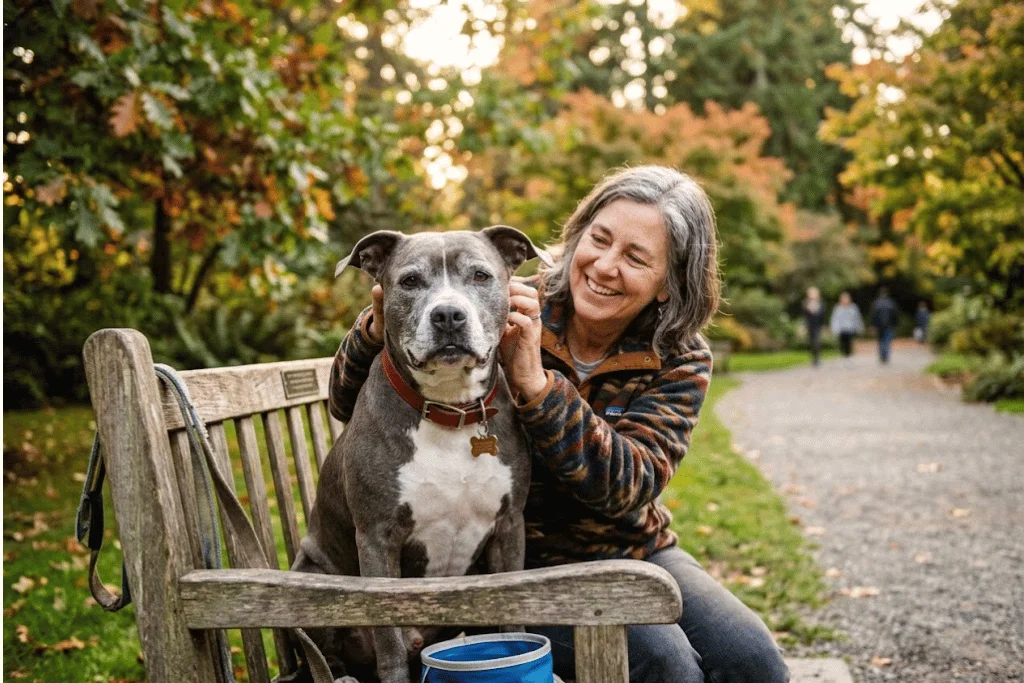
Most owners can plan for a pitbull lifespan of roughly 10 to 14 years. Some healthy dogs reach their mid-teens, while illness can shorten that range. Breed ancestry, body weight, genetics, and preventive veterinary care all matter.
Quick answer: Most Pit Bull-type dogs live about 10 to 14 years. Some breed-specific estimates extend beyond that range. Keeping your dog lean, active, and up to date on preventive care can support healthier aging.
Pitbull Lifespan at a Glance
In everyday U.S. usage, the term “Pit Bull” can describe several related breeds and mixes. That means one lifespan number can’t accurately describe every dog. PetMD also identifies the term as a broader label covering several bully-type breeds.
| Dog or category | Commonly published lifespan | Useful context |
|---|---|---|
| Pit Bull-type dogs | About 10–14 years | A practical general planning range |
| American Pit Bull Terrier | About 8–15 years | Individual genetics and care create wide variation |
| American Staffordshire Terrier | About 12–14 years | Some healthy individuals may live longer |
| Staffordshire Bull Terrier | About 12–14 years | Smaller body size may influence aging |
| Dogs overall | About 10–13 years | Size, breed, genetics, and health affect longevity |
Wisdom Panel lists an 8-to-15-year range for the American Pit Bull Terrier. PetMD gives 12 to 14 years for both AmStaffs and Staffordshire Bull Terriers. Its broader canine guidance places many dogs between 10 and 13 years. Also worth reading: Do Dogs Laugh.
Key takeaways
- Use 10 to 14 years as a practical starting range, not a personal prediction.
- A dog’s exact breed or mix can change the expected range.
- Maintaining a healthy body condition is especially important for longevity.
- Preventive veterinary care should change as a dog moves through different life stages.
- New lumps, reduced mobility, coughing, weight changes, or persistent digestive problems deserve veterinary attention.
Why “Pit Bull” Does Not Mean One Lifespan
In the United States, people often use “Pit Bull” for dogs with similar physical traits. The label may include American Pit Bull Terriers, AmStaffs, Staffordshire Bull Terriers, and various mixes. A shelter label may not reveal every part of a dog’s ancestry.
That distinction matters when estimating life expectancy. Size, inherited conditions, and family history can differ between related breeds. Your veterinarian can make a more useful assessment using ancestry, size, medical history, and current health.
The same principle applies to senior status. AAHA recommends considering breed, size, health, and estimated lifespan instead of relying on one universal age. Its framework defines the senior period as roughly the final quarter of expected life.
What Affects How Long a Pit Bull Lives?
Genetics establish part of a dog’s health profile before birth. Responsible health screening can identify inherited risks within particular breeding lines. For AmStaff breeding stock, AKC-listed recommendations include hip, cardiac, thyroid, and specific DNA testing.
Daily care influences several other risks. Nutrition, body condition, dental health, exercise, parasite prevention, and timely medical treatment all affect long-term health. Regular examinations can also identify subtle changes before they become harder to manage.
Environment matters as well. Safe containment reduces injury risks, while suitable activity supports muscles and cardiovascular health. Dogs also need enough mental activity to remain engaged as their physical abilities change.
Weight Is One of the Clearest Controllable Factors
A large North American study examined 50,787 neutered dogs from 12 breeds. Researchers compared dogs with normal body condition against dogs classified as overweight. Every breed group studied showed shorter median survival among overweight dogs.
The study included a Pit Bull Terrier-type group. Normal-condition males had a median lifespan near 13.8 years, compared with 13.0 years for overweight males. Females had a median lifespan of about 13.8 years versus 12.9 years.
Those results show an association rather than proving weight alone caused earlier deaths. Still, they give owners a practical reason to monitor body condition throughout adulthood. Ask your veterinarian what healthy weight and muscle condition look like for your individual dog.
Health Problems Worth Monitoring
No health condition affects every Pit Bull-type dog. Still, ancestry can influence risks involving joints, skin, the heart, thyroid function, or neurological health. Knowing your dog’s background can help your veterinarian decide which concerns deserve closer monitoring.
Changes in appetite, weight, energy, mobility, breathing, or skin should not become the new normal without assessment. Persistent vomiting also needs attention when it repeats or accompanies weakness, abdominal pain, or dehydration. Writina’s guide to recurring dog vomiting explains important warning signs.
Parasite prevention also remains part of lifelong care. AAHA recommends risk-based flea and tick protection, along with heartworm and intestinal-parasite prevention. Writina’s bed bugs versus fleas guide can help readers tell common household pests apart.
7 Ways to Support a Longer, Healthier Life
These habits cannot guarantee a certain age. They can reduce preventable risks and make changes easier to notice. Owners can adapt each step with guidance from their veterinarian.
- Keep your dog lean. Ask your veterinarian to demonstrate a healthy body condition score.
- Feed a complete life-stage diet. Portion food according to weight, activity, age, and veterinary guidance.
- Exercise consistently. Adjust walks, play, and training around fitness, joints, weather, and age.
- Schedule preventive examinations. Healthy adults generally need routine visits, while seniors may need closer monitoring.
- Protect dental health. Regular oral care can reduce painful dental disease and make eating easier.
- Use appropriate parasite prevention. Your veterinarian can tailor heartworm, flea, tick, and intestinal-parasite protection.
- Investigate changes early. New lumps, coughing, limping, weight loss, or reduced stamina deserve attention.
AAHA says most healthy young adult dogs should see a veterinarian at least once a year. Some dogs benefit from more frequent visits because of age, breed, lifestyle, or medical risks. Senior dogs often require more frequent examinations and targeted diagnostic screening.
Readers looking for more general animal content can also browse Writina’s Pets section. Breed care becomes easier when owners understand normal behavior, everyday health concerns, and age-related changes. Keep veterinary advice at the center of decisions involving an individual dog.
When Is a Pit Bull Considered Senior?
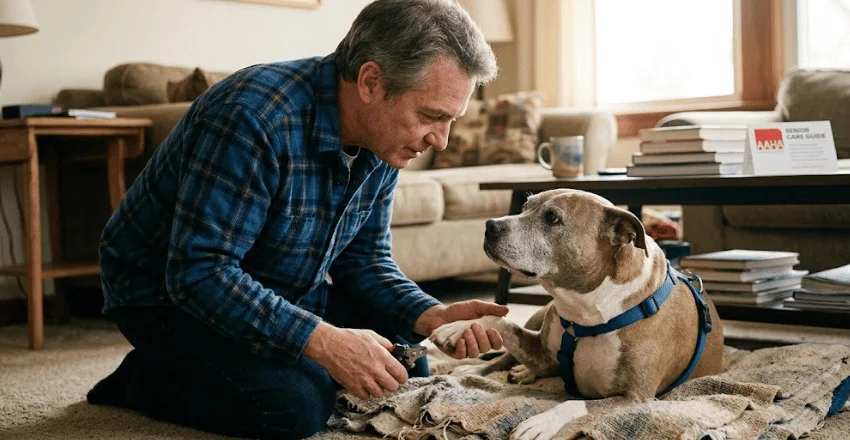
No birthday marks when every Pit Bull suddenly becomes senior. AAHA defines senior dogs using the final 25% of their estimated lifespan. This method accounts for differences involving size, breed, and individual health.
For a dog expected to live around 12 years, that framework begins near age nine. A longer-lived dog may enter the senior phase later. Existing disease or functional decline can make age-based estimates less useful.
Senior care often focuses on mobility, weight, dental health, organ function, pain, and behavioral changes. AAHA recommends more frequent examinations for senior dogs, along with appropriate screening tests. Your veterinarian can recommend a schedule based on your dog’s history.
What Changes in an Older Dog Need Attention?
Slowing down slightly can happen with age, but major changes deserve investigation. Arthritis, dental pain, heart disease, endocrine problems, or other conditions can look like ordinary aging. Early evaluation gives you more options for maintaining comfort.
Contact your veterinarian about persistent coughing, breathing changes, unexplained weight loss, or new exercise intolerance. New or growing lumps should also be examined rather than watched indefinitely. Sudden weakness, collapse, or severe breathing difficulty requires prompt care.
Behavioral changes can matter too. Confusion, disrupted sleep, house-soiling, anxiety, or withdrawal may have medical causes. Documenting when symptoms started can help your veterinary team identify patterns.
FAQ About Pitbull Lifespan
Can a Pit Bull live to 15 years?
Yes, some dogs can reach 15 years. Published breed ranges sometimes extend into the mid-teens. Health history, ancestry, weight, and medical care influence each individual outcome.
Can Pit Bulls live for 20 years?
Twenty years would be exceptional for a dog in this size group. Individual longevity stories exist, but they should not become an expected lifespan. Planning around established breed ranges gives owners a more realistic benchmark.
Do mixed Pit Bulls live longer?
Mixed ancestry alone does not guarantee a longer life. PetMD notes that mixed-breed dogs can sometimes outlive comparable purebred dogs because of genetic diversity. Size, health history, and everyday care remain important.
Does exercise increase life expectancy?
Exercise supports healthy weight, muscle condition, mobility, and cardiovascular fitness. The right amount depends on age, health, temperature, and joint condition. Older dogs may need shorter or lower-impact activity instead of complete inactivity.
What is the average pit bull lifespan?
A practical planning range is about 10 to 14 years for many Pit Bull-type dogs. Specific breeds can have somewhat different published ranges. Your veterinarian can provide a better estimate using ancestry and medical history.
The Bottom Line
Most Pit Bull owners should think in ranges rather than one promised age. Around 10 to 14 years is a useful starting point, while some individuals reach their mid-teens. Genetics and ancestry establish part of the picture, but daily care can influence several preventable risks.
Keeping your dog lean is one of the strongest practical steps supported by lifespan research. Consistent veterinary care also helps detect changes involving weight, joints, teeth, skin, or internal disease. Adjust those routines as your dog moves from adulthood into the senior years.
Use your dog’s next wellness examination to establish a baseline weight, body condition score, and age-specific screening plan. Bring up any new lumps, mobility changes, digestive symptoms, or reduced stamina. A personalized care plan is more useful than trying to predict one exact lifespan.