
If you’re searching “why does my dog keep throwing up,” the answer depends on how often it happens, what comes up, and how your dog acts afterward. A single episode in an otherwise alert dog may be a temporary stomach upset, while repeated vomiting can point to anything from dietary trouble to an intestinal blockage. The safest approach is to watch the whole picture rather than judging the vomit alone.
Quick answer: If your dog keeps throwing up, the causes range from a mild stomach upset or eating too fast to parasites, pancreatitis, poisoning, or an intestinal blockage. Repeated vomiting matters because dehydration can develop. Call a veterinarian if vomiting repeats, and seek emergency care for blood, severe weakness, a swollen belly, or unproductive retching.
This guide is for general education and cannot diagnose an individual pet. Puppies, senior dogs, and dogs with existing medical conditions may need veterinary care sooner than healthy adult dogs. If your dog seems seriously ill or you suspect poisoning or an obstruction, contact a veterinarian rather than relying on home treatment.
| What you notice | What it may suggest | What to do |
|---|---|---|
| One episode, dog acting normal | Minor stomach irritation, eating too fast, dietary indiscretion | Monitor closely |
| Vomiting more than once or repeatedly | Gastrointestinal illness, pancreatitis, parasites, other disease | Call your veterinarian |
| Blood or coffee-ground material | Digestive tract bleeding | Seek prompt veterinary care |
| Swollen belly with repeated dry heaving | Possible gastric dilatation-volvulus, or bloat | Emergency veterinary care |
| Suspected toy, sock, bone, or other object | Possible intestinal obstruction | Urgent veterinary assessment |
| Possible toxin exposure | Poisoning | Call a veterinarian or poison control immediately |
| Vomiting with lethargy or abdominal pain | Potential significant illness | Veterinary evaluation |
Key Takeaways
- An isolated episode in a bright, comfortable dog is different from repeated vomiting.
- Frequency, behavior, hydration, and other symptoms matter more than color alone.
- Blood, severe weakness, abdominal swelling, or repeated retching without producing vomit are red flags.
- Suspected poisoning or swallowing a foreign object needs professional advice quickly.
- Don’t give human medicines unless a veterinarian specifically tells you to do so.
- A photo, timeline, and notes about what your dog ate can help your veterinarian.
Why Does My Dog Keep Throwing Up? 9 Common Causes
Vomiting is a symptom rather than a diagnosis, which is why the list of possible causes is long. Dogs may vomit after eating garbage, changing foods abruptly, eating too fast, or consuming something that irritates the stomach. More serious causes include infections, parasites, pancreatitis, organ disease, toxins, and gastrointestinal obstruction.
Common possibilities include:
- Dietary indiscretion: Eating table scraps, spoiled food, garbage, grass, or another irritating substance.
- Eating too quickly: Gulping a large meal can contribute to digestive upset in some dogs.
- Sudden food changes: Switching diets quickly can upset the gastrointestinal tract.
- Parasites or infections: Intestinal parasites and some bacterial or viral illnesses can cause vomiting.
- Food intolerance or sensitivity: Certain ingredients may trigger gastrointestinal signs in susceptible dogs.
- Pancreatitis: Pancreatic inflammation can cause vomiting, reduced appetite, and abdominal discomfort.
- Foreign-body obstruction: Toys, socks, bones, corn cobs, and other swallowed objects can block the digestive tract.
- Toxin exposure: Human medications, chemicals, plants, and toxic foods can cause vomiting and other serious signs.
- Underlying disease: Kidney, liver, endocrine, inflammatory, and other disorders can produce recurring vomiting.
A gastrointestinal obstruction deserves special attention because it can become an emergency. Cornell University’s College of Veterinary Medicine notes that swallowed objects can lodge in the stomach or intestines and prevent normal passage of food and waste. Prompt veterinary treatment is important because some obstructions require surgery.
For broader animal-related reading, you can also browse Writina’s Pets section. Writina also maintains a wider Lifestyle archive covering household and pet-related topics. Both are useful starting points if you want more everyday guidance on caring for a dog at home.
Vomiting or Regurgitation? The Difference Matters
True vomiting is an active process. You may see nausea, drooling, abdominal contractions, retching, or obvious effort before material comes up from the stomach. Regurgitation is usually more passive and can happen suddenly, often bringing up undigested food without the abdominal effort associated with vomiting.
That distinction can help your veterinarian narrow the possible causes. Repeated regurgitation can point toward a problem involving the esophagus rather than the stomach or intestines. If you can safely record a short video of an episode, it may help your veterinarian determine which process is occurring.
What Does the Color or Contents of Dog Vomit Mean?
Yellow or greenish vomit commonly contains bile, especially when the stomach is relatively empty. White foamy vomiting may occur with gastrointestinal irritation, but repeated foamy vomiting combined with abdominal swelling or distress requires urgent attention. Undigested food may be seen with either vomiting or regurgitation, so the manner in which the episode occurs is an important clue.
Blood deserves more concern than color changes alone. Fresh blood may look red, while digested blood can resemble dark coffee grounds. Cornell advises arranging veterinary care when blood or coffee-ground-like material appears in vomit.
A photo can be useful if you need to speak with a veterinarian. Note the amount, color, consistency, and whether you see food, grass, foreign material, or blood. The appearance may provide clues, but it cannot reliably identify the cause on its own
When Is Dog Vomiting an Emergency?
The fastest way to judge urgency is to combine the vomiting pattern with your dog’s overall condition. VCA Urgent Care advises veterinary attention when a pet vomits more than twice within 24 hours, especially when appetite or energy also drops. Cornell’s Riney Canine Health Center also recommends calling a veterinarian if vomiting lasts more than 24 hours, lethargy, abdominal pain, fever, or blood occurs.
Go to an emergency veterinary hospital or seek immediate professional guidance if you see any of the following.
- Repeated retching that brings nothing up.
- A swollen, firm, or painful abdomen.
- Blood or dark coffee-ground-like material in the vomit.
- Severe weakness, collapse, or difficulty standing.
- Continued vomiting with no ability to keep water down.
- A toy, sock, bone, string, or other foreign object your dog may have swallowed.
- A poisonous food, medication, chemical, or plant your dog may have eaten.
- Breathing problems, seizures, or unresponsiveness.
Repeated unproductive retching with abdominal swelling can be associated with gastric dilatation-volvulus, commonly called bloat. VCA describes abdominal distension with repeated unsuccessful attempts to vomit as a warning sign requiring immediate veterinary attention, and waiting to see whether this pattern resolves can be dangerous.
If poisoning is possible in the United States, contact your veterinarian or the ASPCA Animal Poison Control Center at (888) 426-4435. The ASPCA states that its poison-control service operates 24 hours a day, 365 days a year, and a consultation fee may apply. Don’t try to make your pet vomit unless a veterinary professional specifically directs you to do so.
What Can You Do at Home After One Mild Episode?
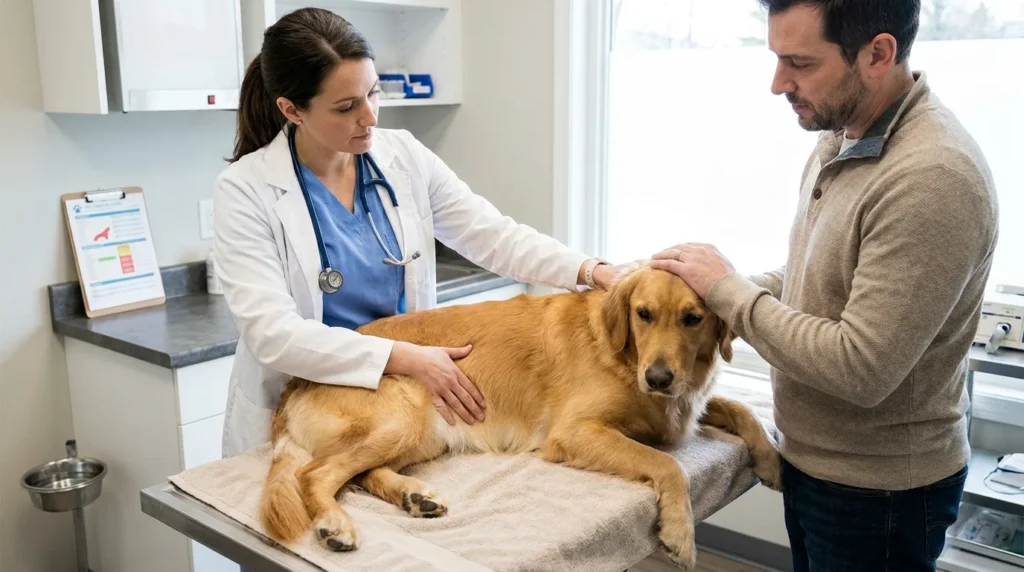
Home monitoring is most appropriate when vomiting happened once, and your dog remains alert, comfortable, and otherwise normal. Keep your dog away from garbage, table scraps, unfamiliar foods, toys that can be swallowed, and other possible triggers while you observe them. If another episode occurs or your dog’s behavior changes, contact your veterinarian rather than continuing to experiment with home remedies.
Access to water matters, but a dog that repeatedly vomits after drinking needs veterinary advice. Dietary recommendations vary by age, health, and the suspected cause, so ask your veterinarian before attempting prolonged fasting or major dietary changes. Puppies, dogs with diabetes, frail seniors, and pets with chronic disease may need a different approach.
Avoid human anti-nausea medicines, pain relievers, antacids, or other medications unless your veterinarian has recommended the specific drug and dose for your pet. VCA specifically warns against administering human medications without veterinary guidance. Treating the wrong condition at home can also delay diagnosis of an obstruction, toxicity, or another significant problem.
Why Is My Dog Vomiting but Acting Normal?
A dog can vomit once and then appear completely normal because the stomach irritation was brief. Cornell notes that infrequent isolated vomiting may resolve, while vomiting that becomes a regular pattern can indicate disease. “Acting normal” is reassuring, but it does not make recurring episodes something to ignore.
Keep a simple log if the problem comes and goes. Record the date, time, meals, treats, medications, activity, stool changes, and what the vomit looked like. A repeated pattern after certain foods, early in the morning, or several hours after meals can give your veterinarian useful information.
What Will the Veterinarian Want to Know?
Your veterinarian will start with the history because the timing and circumstances can narrow the possibilities. Be ready to explain how many times your dog vomited, when it started, what came up, and whether diarrhea, pain, weakness, weight loss, or appetite changes are present. Mention any chance of access to garbage, medications, household chemicals, human food, toys, bones, plants, or other objects.
Depending on the examination and history, the veterinarian may recommend diagnostic testing. Bloodwork, urine testing, X-rays, ultrasound, or other procedures may be used when an underlying illness or obstruction is suspected. Treatment depends on the cause, not on vomiting alone.
Bring a photo or sample when your veterinary clinic says it would be useful. Also take the packaging for any medication, food, chemical, or other substance your dog may have consumed. Accurate details are more useful than trying to identify the cause from vomit color alone.
How to Reduce the Risk of Future Vomiting
You cannot prevent every upset stomach, but you can reduce several avoidable risks. Keep medications, chemicals, trash, toxic foods, and small swallowable objects outside your dog’s reach. Make dietary changes gradually when your veterinarian recommends switching foods, and supervise dogs that tend to chew or swallow household objects.
Dogs that gulp meals may benefit from changes to feeding routines recommended by their veterinarian. Slow-feeder bowls and puzzle feeders are designed to prevent a dog from bolting a meal, though a feeding accessory cannot address persistent vomiting. Repeated digestive problems still need a veterinary assessment.
Parasite prevention is another part of routine pet care, although vomiting has many causes unrelated to parasites. If you are also dealing with household pests, Writina’s bed bugs vs. fleas guide explains how those two pests differ. Keep routine veterinary visits up to date so that vaccinations, parasite control, nutrition, and other preventive needs can be tailored to your dog.
The Bottom Line
One episode of vomiting in an otherwise comfortable dog may pass without becoming an emergency. Repeated vomiting deserves more attention because dehydration, obstruction, poisoning, pancreatitis, infection, or another underlying problem may be involved. The most useful clues are frequency, behavior, abdominal discomfort, possible exposures, and whether your dog can keep water down.
If the vomiting repeats, call your veterinarian and describe exactly what you are seeing. Seek emergency care for blood, severe weakness, abdominal swelling, repeated unsuccessful retching, suspected poisoning, or possible foreign-object ingestion. Acting early is safer than trying to diagnose a potentially serious cause from the appearance of vomit alone.
Frequently Asked Questions
What to feed and when depends on the circumstances and your dog’s health. Mild isolated cases may sometimes be managed with temporary dietary adjustments, but repeated vomiting requires professional advice rather than repeated fasting or home treatment. Ask your veterinarian for instructions, especially for puppies, seniors, or dogs with medical conditions.
Yellow vomit commonly contains bile and may appear when the stomach is empty. It can also occur after repeated vomiting or alongside gastrointestinal and other medical problems. If bile vomiting keeps returning, happens several times, or comes with other symptoms, arrange a veterinary evaluation.
There is no single number that applies to every pet because age, size, health, and other symptoms affect urgency. VCA Urgent Care recommends veterinary attention when a pet has vomited more than twice within 24 hours. Contact a veterinarian sooner if blood, pain, weakness, suspected poisoning, a foreign object, or other concerning signs are present.
A dog may have a mild stomach upset and remain energetic, especially after one isolated episode. Recurring vomiting is different and should be discussed with a veterinarian even if appetite and behavior look normal between episodes. Cornell notes that a repeating pattern can indicate an underlying problem that deserves investigation.