
A white pimple on lip is a very common skin concern that can appear suddenly and cause immediate worry due to its visible location. Since the lips are one of the most sensitive and noticeable parts of the face, even a small bump can affect your confidence and make you overthink what it might be. Many people assume it is something serious at first, but in reality, most cases are harmless and temporary.
The lips have delicate skin and lack the strong oil protection found elsewhere on the face. As a result, they are more prone to dryness, irritation, bacterial buildup, and minor infections. A white bump may form due to blocked oil glands, trapped skin proteins, mild viral infections, or even reactions to lip products.
While most white pimples heal on their own without treatment, some may require attention if they persist, grow, or become painful. In rare cases, they can be linked to conditions like cold sores, fungal infections, or other oral health issues. This is why understanding the exact cause is important before starting any treatment.
White Pimple on Lip: Causes, Symptoms, and Solutions Table
| Aspect | Details |
|---|---|
| Common Issue | White pimple or bump on the lip |
| Main Causes | Blocked pores, infections, or skin conditions |
| Appearance | Small white or yellowish raised bump |
| Pain Level | Can be painless or slightly painful |
| Duration | Usually lasts 3–7 days |
| Fordyce Spots | Harmless visible oil glands |
| Cold Sores | Viral infection causing blisters |
| Milia | Keratin trapped under the skin |
| Oral Thrush | Fungal infection causing white patches |
| Serious Concern | Rarely linked to oral cancer |
| Early Symptoms | Small white bump or irritation |
| Warning Signs | Pain, bleeding, or growth |
| Risk Factors | Poor hygiene, stress, weak immunity |
| Home Remedy 1 | Warm salt water rinse |
| Home Remedy 2 | Honey application |
| Home Remedy 3 | Aloe vera gel |
| Home Remedy 4 | Ice compress |
| What to Avoid | Popping or touching the bump |
| Hygiene Tip | Keep lips clean and dry |
| Skincare Tip | Use gentle, non-irritating products |
| Medical Treatment | Creams, antiviral, antifungal medicines |
| Cosmetic Removal | Laser, cryotherapy, minor procedures |
| Healing Time | Depends on cause and care |
| Prevention | Healthy lifestyle and proper lip care |
| When to See Doctor | If it lasts more than 2 weeks or worsens |
What Does a White Pimple on the Lip Mean?
A white pimple on the lip is usually a small, raised bump that may contain oil, keratin, or pus. It can appear on the outer lip, along the edge, or inside the lip.
Sometimes it feels:
- Slightly painful
- Irritating
- Completely painless
The appearance alone does not always tell the full story. That is why it is important to understand the various causes.
Common Causes of White Pimple on Lip
1. Fordyce Spots (Most Common and Harmless)
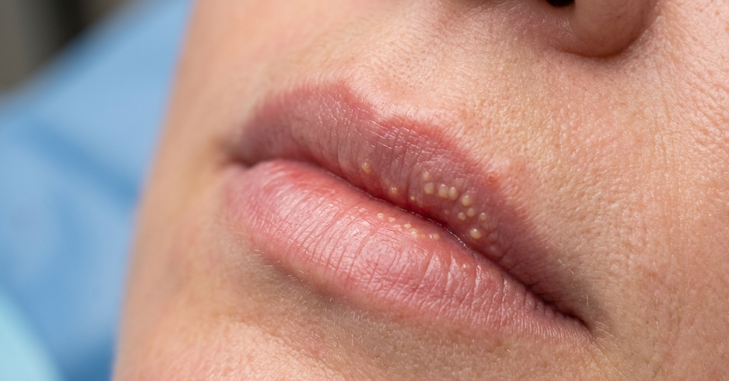
Fordyce spots are small, harmless white or yellowish bumps that commonly develop on the lips, most often along the inner surface. These are visible oil glands and are completely natural.
- Size: Around 1–2 mm
- Pain: None
- Risk: Harmless
Many people are born with them, but they become more noticeable during puberty. In fact, a large percentage of adults have them. They do not need treatment unless you want to remove them for cosmetic reasons.
2. Herpes Simplex (Cold Sores)

A white bump can sometimes be the early stage of a cold sore, caused by the herpes simplex virus.
- Starts as a small white bump
- Turns into fluid-filled blisters
- May cause burning or tingling
The virus spreads through close contact, even when no visible sores are present. There is no complete cure, but antiviral medications can help reduce symptoms and shorten the duration of outbreaks.
- Reduce symptoms
- Speed up healing
- They can also help reduce how often the condition comes back.
3. Milia (Trapped Skin Protein)
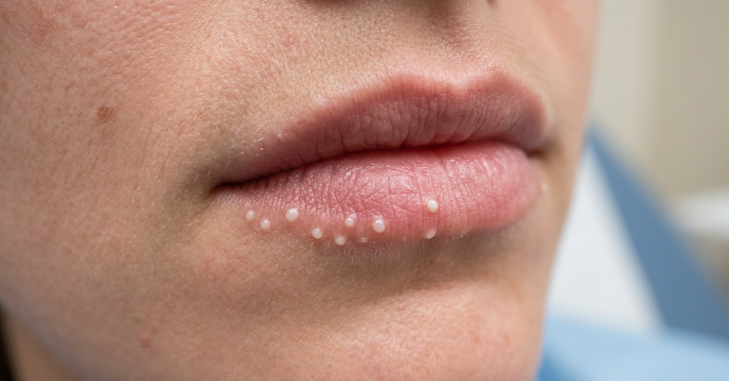
Milia are tiny white bumps that develop when keratin becomes trapped beneath the skin’s surface.
- Common on the face, but it can also appear on the lips
- Usually painless
- Often linked to heavy skincare products.
They often go away on their own, but a dermatologist can remove them if needed.
4. Oral Thrush (Fungal Infection)

Oral thrush is caused by a fungus and can lead to white or creamy patches on the lips and inside the mouth.
It is more common in:
- Individuals who have a weakened immune system
- Those taking certain medications
- Doctors usually treat it with antifungal medicines.
5. Oral Cancer (Rare but Serious)

In rare cases, a white bump on the lip may be a sign of oral cancer.
Warning signs include
- A lesion or bump that fails to heal over time
- Bleeding or ulcer-like appearance
- Swelling around the jawline or neck area
Risk factors may include
- Excessive sun exposure
- Tobacco use
- Heavy alcohol consumption
Early diagnosis is very important, so do not ignore unusual or persistent symptoms.
6. Other Natural Causes
Sometimes, white bumps are simply genetic variations. Just like moles or birthmarks, some people naturally have small bumps on their lips.
When Should You Be Concerned?
Most white pimples are harmless, but you should pay attention if you notice
- Pain or discomfort
- Bleeding from the bump
- Difficulty swallowing or chewing
- Numbness in the lips or tongue
- Swelling around the jawline or neck area
Even if there are no serious symptoms, you should consider seeing a doctor if the bump does not go away within two weeks.
How Doctors Diagnose White Pimple on Lip?
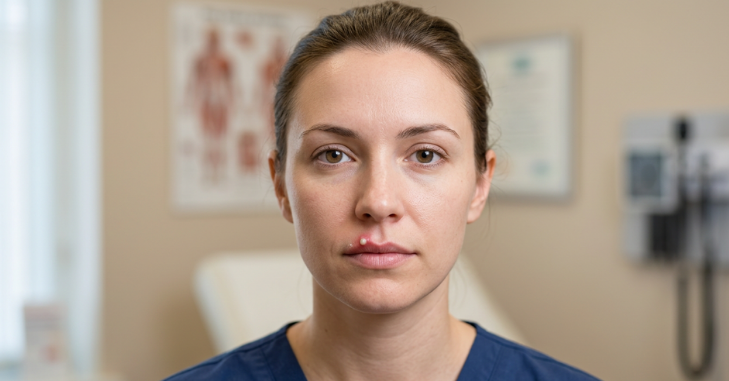
A doctor usually starts with a simple physical examination. They may
- Check the bump visually.
- Examine your lips, mouth, and neck.
- Feel for swelling or lymph nodes.
If needed, they may
- Take a sample (swab) to test for infection.
- Order blood tests
- Perform a biopsy if cancer is suspected.
This helps them identify whether the cause is bacterial, viral, or fungal.
Natural Remedies and At-Home Care

If the bump is harmless, you can try simple home care methods.
Warm Saltwater Rinse
Helps reduce bacteria and keep the area clean.
Honey Application
Natural antibacterial properties support healing.
Aloe Vera
Soothes irritation and reduces inflammation.
Ice Compress
Reduces swelling and discomfort.
What You Should Avoid?

- Do not pick or squeeze the bump.
- Avoid touching your lips frequently.
- Stay away from harsh or expired lip products.
Picking at the bump can increase irritation and lead to infection.
Professional Treatment Options
If needed, doctors may recommend:
- Antiviral medications for cold sores
- Antifungal treatments for infections
- Topical creams for skin conditions
For cosmetic removal, options may include
- Laser treatment
- Cryotherapy (freezing)
- Minor surgical procedures
Prevention Tips for Healthy Lips

Keeping your lips healthy can reduce the chances of developing white pimples.
- Maintain good hygiene
- Use gentle lip care products
- Stay hydrated
- Avoid sharing personal items
- Protect lips from excessive sun exposure.
Conclusion
A white pimple on lip is usually not something to panic about. In most cases, it is harmless and may resolve on its own without treatment. However, understanding the cause can make a big difference in how you manage it. Instead of guessing or trying random treatments, take a calm and informed approach. Pay attention to your symptoms, follow simple care routines, and avoid habits that can worsen the condition.
At the same time, do not ignore warning signs. If a bump lasts too long, changes in appearance occur, or it causes discomfort, it is always a good idea to consult a doctor. Early attention ensures better outcomes and peace of mind. Your lips are delicate and deserve proper care. With the right knowledge and habits, you can keep them healthy, smooth, and free from unnecessary concerns.
Want to know about Rose Water Benefits for Face: How It Helps with Acne, Dark Spots, and Anti-Aging Naturally Check out our HEALTH category.
Frequently Asked Questions (FAQs)
Keep it clean, avoid touching it, and let it heal naturally. See a doctor if it doesn’t improve in 1–2 weeks.
No, popping can cause infection, swelling, and scarring.
Most lip pimples heal within 3 to 7 days, depending on the cause.
Do not try to remove it yourself; a dermatologist can safely treat or remove it.