

In roughly ten states, a home sale cannot close unless an attorney handles or reviews the paperwork. In much of the rest of the country, a title company or escrow officer runs the same closing. No attorney shows up at all. That split is why real estate law feels routine to one buyer and costly to the next.
Short answer: it is the mix of state statutes, recorded property records and private contract terms. Together they control how land and buildings get sold, financed, used or disputed. In a home sale, it sets what the contract must say and who checks ownership. It also decides which defects a seller must reveal, and who signs at closing.
Key takeaways
- Six stages carry the legal risk in a home sale: offer, contract, due diligence, title, financing and closing.
- About ten states require an attorney at a residential closing. Roughly half the country uses title or escrow companies instead.
- Title searches look backward for problems. Title insurance pays out when the search misses one.
- Contingency deadlines belong to the buyer, and a missed one can cost you your deposit.
- Median total loan costs on a US home purchase reached $6,684 in 2023, with title and settlement fees inside that figure.
What real estate law covers, stage by stage
Most guides list practice areas in the real estate law process: contracts, title, zoning, landlord duties, foreclosure. That tells you what an attorney studies, not what can go wrong next Tuesday. Below, each of the six stages of a typical residential purchase sits against its risk and the party who clears it.
| Stage | Main legal risk | Who clears it |
| Offer | Signing binds you before you are ready to be bound | Buyer, with an agent or attorney reading the terms first |
| Purchase contract | Vague terms, missing contingencies, no real remedy if the seller walks | Both sides; a closing attorney in the state |
| Due diligence and inspection | Serious defects surface late, or your notice goes out after the window shuts. | Buyer, working from the inspector’s written report |
| Title search | Liens, an old mortgage never released, missing heirs, boundary claims | Title company, title examiner or closing attorney |
| Financing contingency | Loan denial or a low appraisal after the deadline has passed | Buyer, using the lender’s written decision |
| Closing | Wrong deed language, unpaid taxes, wired funds sent to a fraudster | Settlement agent or closing attorney |
Read down the third column and a pattern shows up. Buyers own the deadlines. Professionals own the records. Nobody covers both.
Attorney states and title company states

Your state decides who sits at the closing table. Ten states expect an attorney to handle or supervise a residential closing. That list runs Connecticut, Delaware, Georgia, Massachusetts, New Hampshire, New York, North Carolina, South Carolina, Vermont and West Virginia. Another dozen states want an attorney only for narrow jobs, such as drafting the deed. Florida and Ohio work that way.
Everywhere else, a title company or escrow agent does the work. They collect the payoff figures, prepare the settlement statement, and record the deed. What they cannot do is give you legal advice. An escrow officer stays neutral between buyer and seller by design, so nobody in the room is arguing your side.
That neutrality is fine on a clean sale of a single-family home. It gets thin fast when the property has a shared driveway, an unpermitted addition, a tenant in the basement, or a divorcing seller.
The offer and the contract: when words start binding you
Signature, not closing, is the moment your position hardens. Once both sides sign, the purchase agreement is enforceable. Most states also require it in writing. Read three things before you sign. What the contingencies are. How many days each one runs. What happens to your earnest money if the deal can’t close. Sellers should check the remedy clause with the same care, because a buyer who walks late may still owe the deposit.
Due diligence: the inspection window is your leverage
Inspection periods are short, often seven to fourteen days. During that window you can usually cancel for almost any reason and keep your deposit, and once it shuts your options narrow to fraud claims and whatever the contract allows.
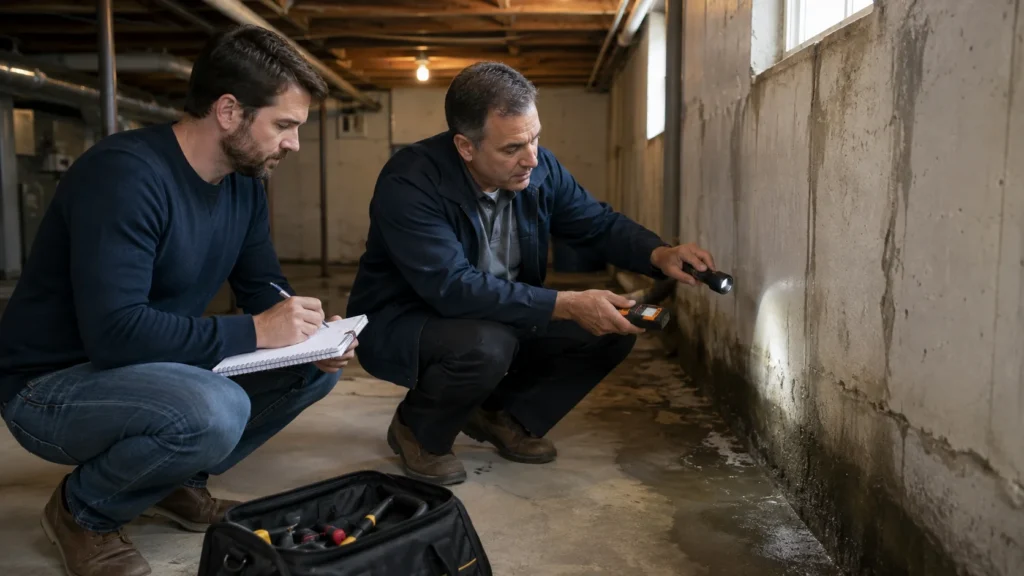
Use that window on the expensive systems rather than the cosmetics: roof, foundation, sewer line, electrical panel, plus heating and cooling. A wet basement or a cracked footing turns into a five-figure bill. Our breakdown of what foundation waterproofing costs shows the range you could be arguing over. Price the fix before you ask for a credit. Ask for a credit or a price reduction rather than a promise of repairs. Cash at closing is enforceable. Good intentions in the two weeks before a seller moves out are not.
Title searches, title defects and title insurance

Title work is a records job. Someone reads the deeds, mortgages, judgments, tax records and court filings tied to that parcel, then reports whatever clouds the ownership, from old liens to missing signatures.
Common defects look mundane and cost real money:
- An unpaid mechanic’s lien from a remodel the last owner never settled.
- Old mortgages, paid off but never formally released in the county records.
- An heir who inherited a share and never signed a deed.
- Fences, sheds or driveways sitting across the surveyed boundary.
- Unpaid property taxes or a utility assessment that follows the land.
Title insurance covers a different problem, the defect nobody found, and it comes in two forms. Lender policies protect the bank for the loan amount only. An owner’s policy, paid once at closing, protects your equity. It also pays for the defense if someone later claims an interest in your home. Buying one is optional in most states and usually worth it.
What sellers have to disclose
Most states require a written disclosure of known material defects on a standard form in the real estate law process: water intrusion, structural repairs, past pest treatment, a failed septic system, prior flooding. Federal law adds a lead paint disclosure for any home built before 1978.
Knowing is the trigger. You need not hire an inspector on your own house. But you cannot paint over a stain and stay silent about the leak behind it. Damp basements sit right on that line. Moisture bad enough that you have priced sealing the basement yourself usually points to a drainage fault, and a court would call that material.
Sellers who guess wrong here get sued after closing, when the buyer arrives with receipts and a plumber’s opinion about how long that stain had been spreading.
Financing contingency deadlines and who owns them
Your financing contingency is a date, not a feeling. Say the contract gives you 21 days to secure a loan commitment. To cancel and recover your deposit, your written notice has to land by day 21.
Miss it, and two things happen at once. Your protection lapses, and your earnest money is exposed, even though the lender said no rather than you. Appraisal shortfalls work the same way, which is why extensions get requested in writing and signed by both parties.
What the legal side actually costs
Hiring a real estate attorney costs less than most buyers fear. Expect a flat fee of about $500 to $2,000 for a standard residential closing. Hourly rates run from roughly $150 to $500, depending on the city and the complexity. Manhattan sits at the top of that range.
Set that against total closing costs. In December 2024, the Consumer Financial Protection Bureau reported that median total loan costs for home purchase loans were $6,684 in 2023. That was up 12.3 percent from $5,954 in 2022, and the figure already includes settlement agent and title insurance charges. Contract review is often the cheapest line on your closing statement.
After you close
Recording the deed ends the transaction and starts ownership. Keep four documents together: the deed, the owner’s title policy, the closing statement, and the disclosure form. All four matter if a boundary or defect dispute shows up later. Property tax and insurance obligations begin immediately.
Then the work turns practical: permits for the addition you plan, and repairs the inspector flagged. Swapping out an aging unit now sits on your side of the ledger. That might mean new ductwork, or the cost of hardwood floor installation you had planned.
Your next step
Find out which category your state falls into before you write an offer, then decide who reviews your contract and who explains the closing statement to you. If you are in an attorney state, call two firms and ask for a flat closing fee. In a title company state, spend $600 on a contract review anyway. That goes double for a property with tenants, unpermitted work, or a shared boundary. One hour of review beats a year of litigation.
FAQs
In about ten states, yes. Elsewhere, it is optional, and a title company can close the sale. Hire one anyway for a probate sale, a short sale, or new construction. Same goes for a property with tenants, or any deal where a boundary or permit looks wrong.
Property law is the broader category and covers rights in anything you can own, including personal property. Real estate law is the part that deals with land, the buildings on it, and the rights attached to both.
Searching means an investigation of public records before closing. Insurance pays out if that search missed something and a claim appears years later.
Each side pays its own. In New York and similar markets, each party hires an attorney, and both fees appear on the settlement statement.
Rarely without cost. Once the contract is signed, a seller who walks may face a claim for damages or an action to force the sale. One exception: a contract term or state disclosure rule that lets them cancel.